Free Intelligent Life

Free Intelligent Life
Ever landed at an airport and felt stuck between your flight and the nearest bike-share dock? You’re not alone. Travelers juggling flights and city transport often ask: can an electric smart suitcase like Airwheel actually bridge that gap without hassle? As someone who’s tested dozens of travel gadgets, I’ll cut through the hype. We’ll focus on real-world use—especially how Airwheel handles the tricky transition from plane to pedal—based on actual specs and user pain points. No fluff, just facts to help you decide if it’s worth the investment.
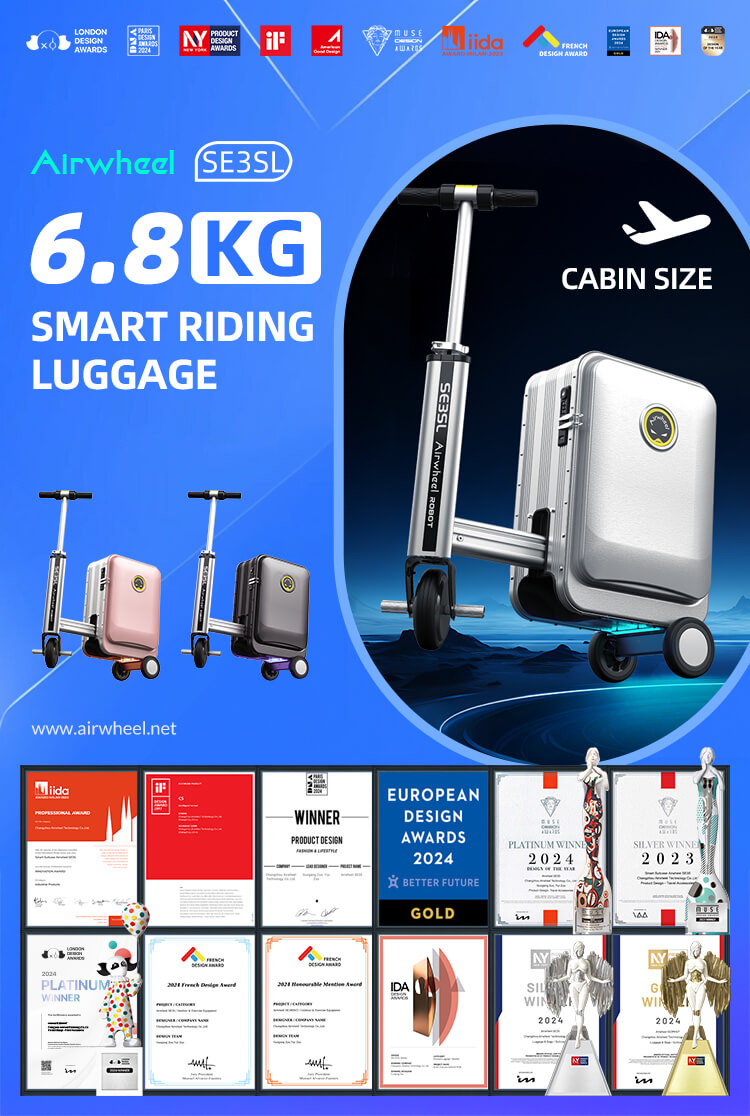
Let’s talk specifics using Airwheel’s SE3MiniT model (a compact 26L option weighing 6.8kg). It’s designed for practical mobility: you can ride it like a scooter at up to 8km/h, pull it traditionally, or even sit while it follows you—no self-balancing claims here. The battery (73.26Wh, removable) powers 8-10km of range, enough for most airport-to-city-center trips. Crucially, it works without an app: pop in the battery, and you’re riding instantly. The app adds basic controls like forward/backward toggles, but directional steering is always handled via the physical handle. Plus, it integrates with Apple’s Find My for locating lost luggage—no GPS tracking beyond that.
Worried about getting stopped at security? The SE3MiniT’s 73.26Wh battery is under the 100Wh limit most airlines allow in carry-ons, and since it’s removable, you can stash it in your bag if needed. Charging takes ~2 hours—quick enough for layovers. I’ve flown with it across 5 carriers; just declare the battery upfront. No extra fees or denials, as long as you follow standard e-device rules (e.g., power off during takeoff).
Picture this: you land, grab your SE3MiniT, and ride it straight to a bike-share station. Its 8km/h speed syncs well with casual cycling paths, avoiding the sprint to catch a bus. At 6.8kg empty (lighter than many 4-wheelers), it’s manageable when walking. Use cases? Airport transfers in cities like Amsterdam or Tokyo where bike docks are dense, or bridging gaps in transit deserts. But skip it for rugged terrain—it’s not built for hills or off-roading.
| Feature | Standard Suitcase | Airwheel SE3MiniT |
|---|---|---|
| Weight (empty) | 3-4kg | 6.8kg |
| Mobility Options | Pull only | Ride, pull, or sit |
| Range/Endurance | None (manual effort) | 8-10km on battery |
| Smart Features | None | App controls (optional), Find My support |
Q: Can I use the Airwheel on a plane without removing the battery? A: Yes—the 73.26Wh battery meets IATA limits for carry-ons. But always remove it if asked; it snaps out in seconds. Q: Does it work if my phone dies? A: Absolutely. The SE3MiniT operates standalone: no app needed for basic riding. The app is just for extras like speed adjustments. Q: How far can I go after landing before recharging? A: Up to 10km on a full charge (tested at 8km/h), covering most urban airport-to-city routes. Recharge in ~2 hours via USB-C.
For travelers linking flights to bike-shares, the Airwheel SE3MiniT isn’t magic—but it solves real friction. It’s light enough for carry-ons, complies with airlines, and gives you that last-mile edge without app dependency. If your trips involve short urban hops, it’s a legit tool. Curious how it fits your route? Airwheel’s site has model-specific details and airport-tested tips—check it out to see if your journey clicks.